Gift acceptance policy template
- Acceptance clauses the policy needs
- 18
- Computed on this page from the inputs below
- Of those, clauses that must require review
- 9
- Computed on this page from the inputs below
- Gift kinds the policy can let staff accept unreviewed
- 3
- Computed on this page from the inputs below
- Share of gift kinds that must be reviewed, percent
- 62.5
- Computed on this page from the inputs below
Every figure on this site comes from the policies you write and the method shown beside each figure: your categories of record, your labels, your headcount. Where a page states a fact about a form or a framework it names the document it came from, and those are the NIST and IRS documents cited on the page. Nothing here is legal advice.
Email me this result
We will send you these figures and a link back to them. One email, nothing else unless you tick the box.
18. These are worked figures on a sample organization, not yours: change every one of them.
Download the Gift acceptance policy template worked example (CSV)
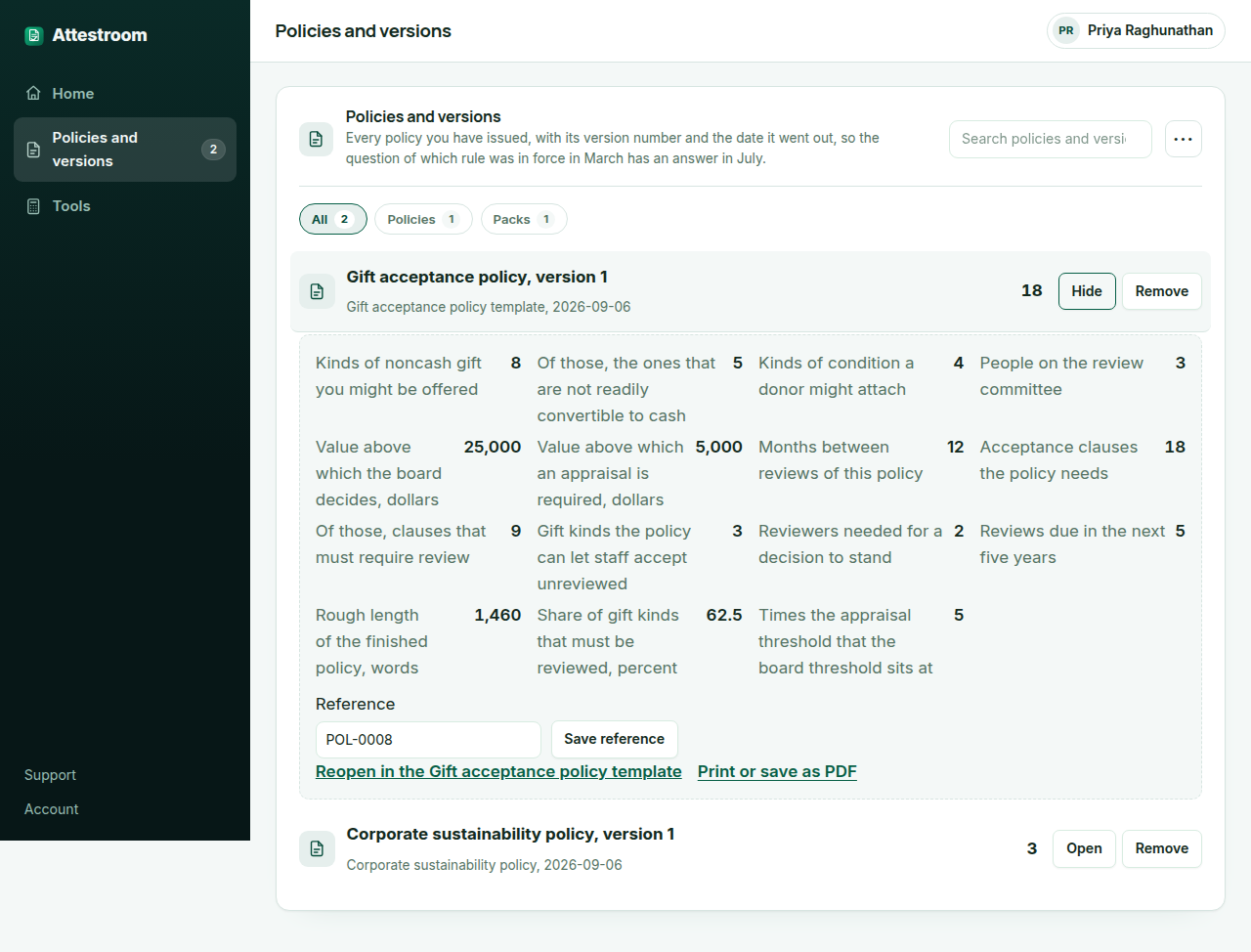
A gift acceptance policy exists for the gifts you should decline. Cash needs no policy. What needs one is land with a possible environmental problem, a cryptocurrency you cannot value, a vehicle nobody can sell, or a gift with conditions the organization cannot meet. This builder turns your own list of gift kinds into the clauses the policy needs, separates the ones staff may accept without review from the ones that must go to the committee, and sets the two thresholds every such policy needs. Change every figure: the defaults are a worked example, not your organization.
Attestations: what people ask before they run one
Why does the IRS care whether we have one?
Schedule M of Form 990 asks it directly at line 31: whether the organization has a gift acceptance policy that requires the review of any nonstandard contributions. It is a yes or no on a public return, which makes this one of the few policies whose absence is visible from outside.
What counts as nonstandard?
Anything not readily convertible to cash and anything carrying an obligation: real property, closely held stock, cryptocurrency, art, vehicles, and gifts with conditions attached.
Why two thresholds?
One decides when an appraisal is needed and one decides when the board rather than the committee takes it. Setting both in advance is what stops each difficult gift becoming a fresh argument.